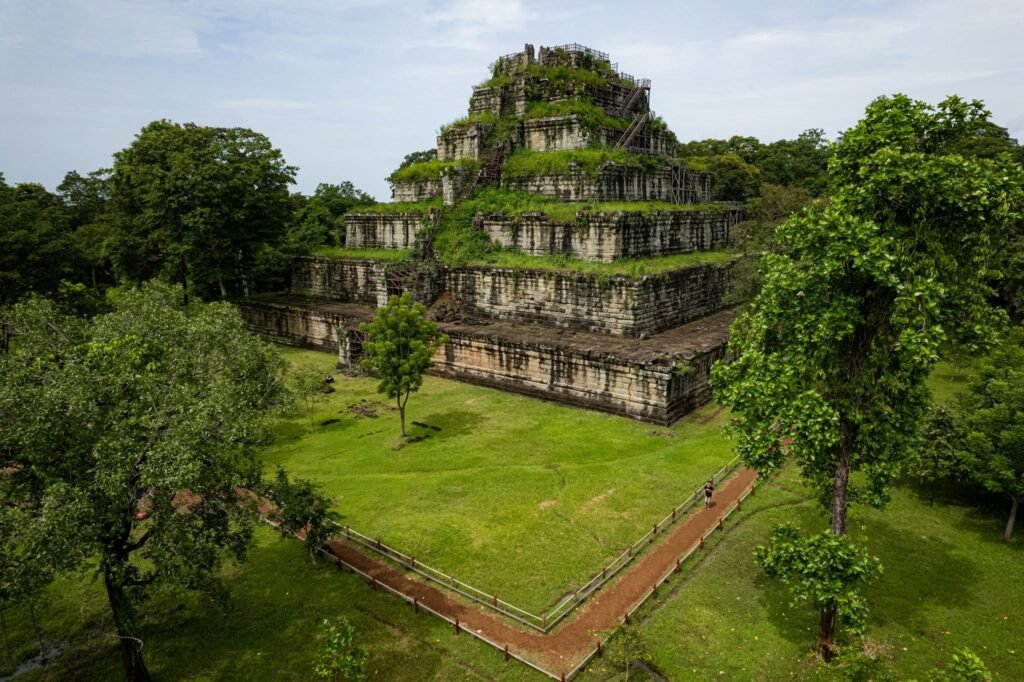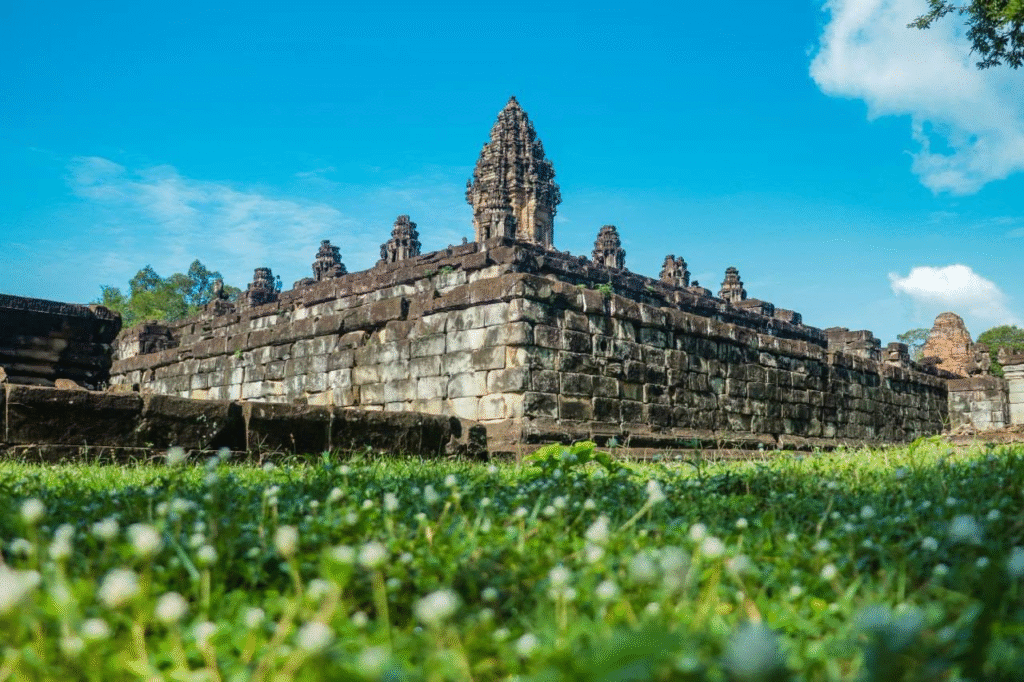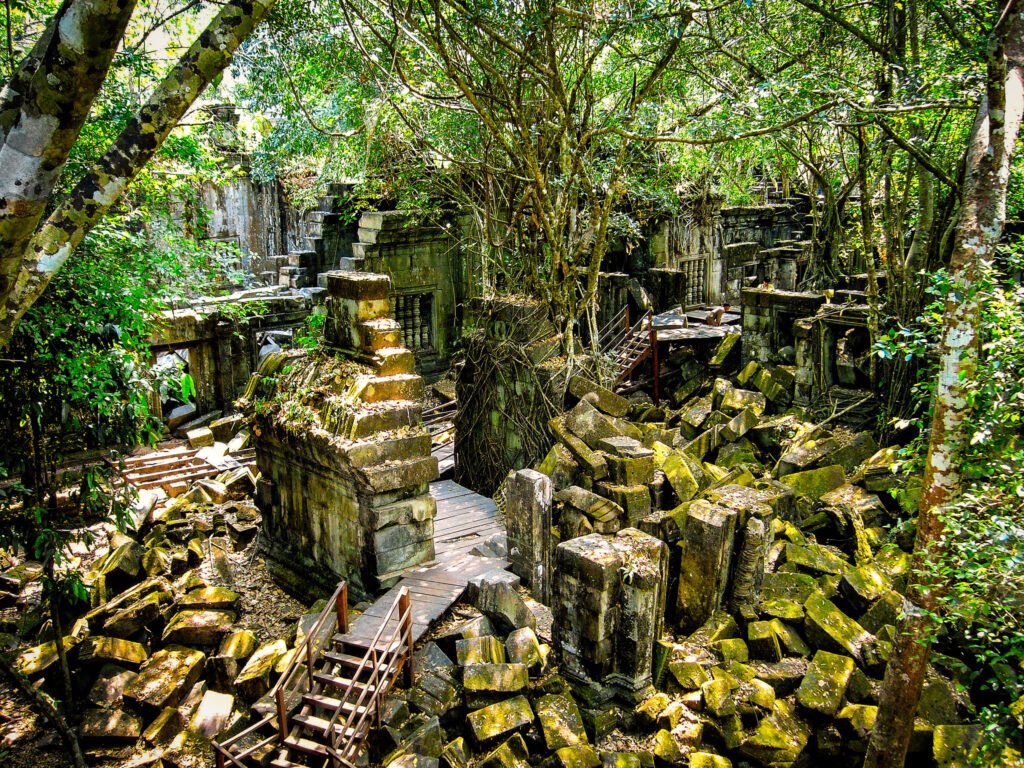
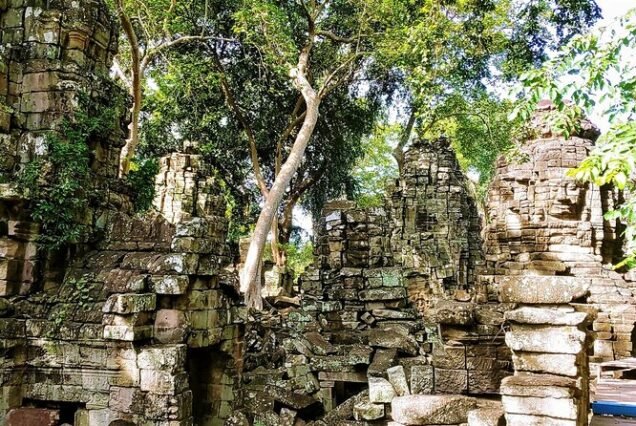
The Banteay Chhmar Tour covers more history and more ground than most one-day trips out of Siem Reap. Here is what stands out:
Drop-off is back at your hotel. The Banteay Chhmar Tour from Siem Reap is structured so you are back in the city by around 4:00 PM to 4:30 PM.
If your hotel serves breakfast, ask the front desk for a takeaway breakfast box the evening before your tour. The 7:30 AM pickup does not allow time for a full sit-down hotel breakfast on the morning of your trip.
The van is private, air-conditioned, and set up for a comfortable road trip. It is not a shared minibus with other bookings.
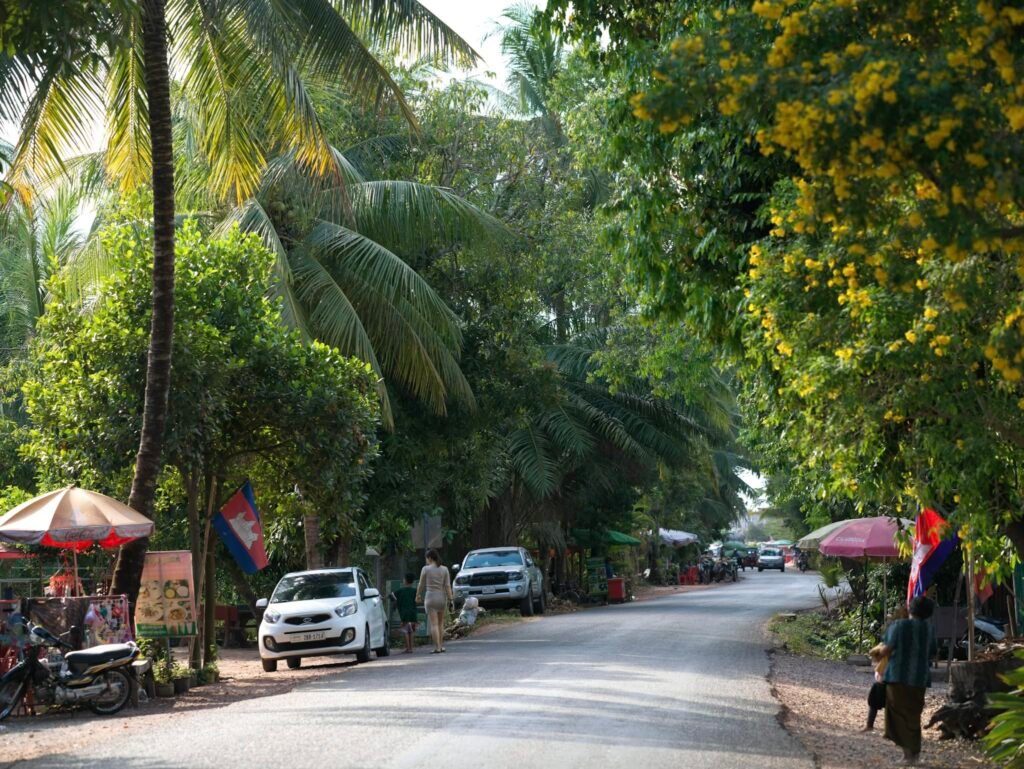
Your guide and driver meet you at your hotel lobby. The drive to Banteay Chhmar takes approximately two hours. As you leave Siem Reap and head northwest, the city quickly gives way to flat farmland. Rice paddies spread out wide on both sides of the road. Wooden stilt houses dot the open landscape. Your guide begins talking about the area, the people here, and what you are about to see. By the time the first signs for Banteay Meanchey Province appear, you are already inside a Cambodia most travelers never reach.
You cross into Banteay Meanchey Province, where the countryside opens even wider and the sky seems twice as big. The guide points out local markets along the road and explains how daily living in this part of Cambodia differs from the busier pace in Siem Reap. This is not a tourist corridor. This is the working northwest.
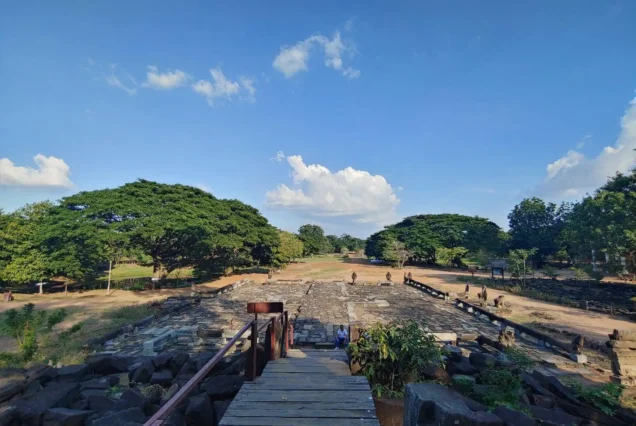
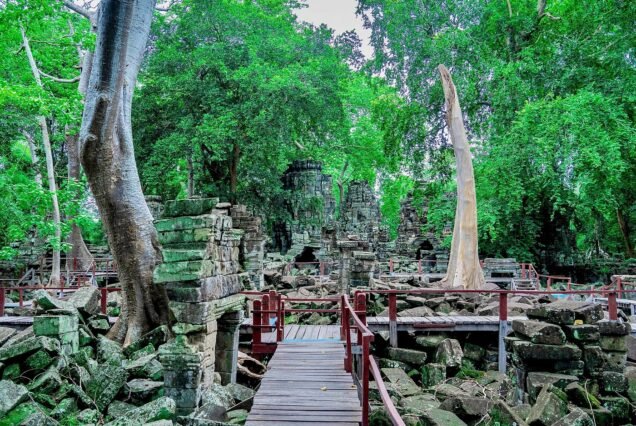
You park and walk in. The outer wall of Banteay Chhmar stretches wide on all sides, and the first thing most visitors notice is the scale of the place. This temple site was built during the reign of King Jayavarman VII in the late 12th century. It covers nearly 1 square kilometer and was meant to serve as both a military fort and a Buddhist shrine for the Khmer empire.
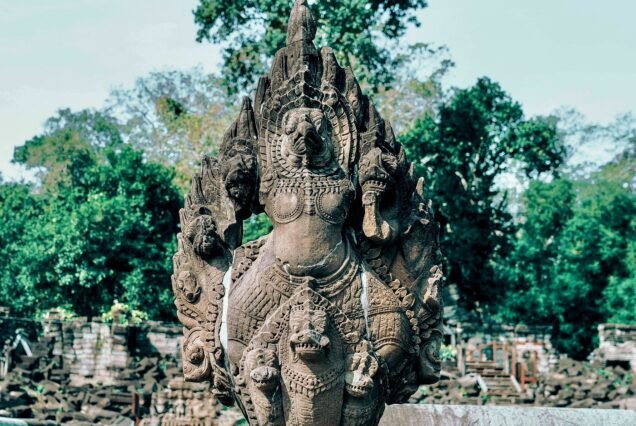
The name translates to “Narrow Fortress.” Jayavarman VII reportedly ordered its construction as a memorial to his son and four generals who died defending Cambodia against the Cham people. That story is carved into the walls in long, running rows of bas-relief panels. Naval battle scenes, infantry lines, war elephants, and chariots fill gallery after gallery. Stone soldiers march across walls that have been standing longer than most countries have existed.
The face towers are the other thing people remember. Giant stone faces, four to a tower, look out in every direction. This is the Bayon style, used across Jayavarman VII’s building projects from Angkor Thom to Ta Prohm. At Banteay Chhmar, these towers carry the weight of eight centuries without apology. Your guide walks you through the galleries, points out the medical blessing carvings, explains the tantric Buddhist imagery, and helps you read the story in the stone. Two hours passes quickly here.
After the temple, you head to a small local eatery near Banteay Chhmar. Lunch is included in the tour price. The food is Cambodian, freshly prepared, and genuinely good. This is a proper break, not a rushed pit stop.
A quick drive east takes you to the next stop.
The Prasat Mebon tour stop is quieter than the main temple. This satellite temple was built at the center of a massive baray, a man-made reservoir measuring 1,500 meters by 1,000 meters. The water management network around Banteay Chhmar was one of the most well-built hydraulic systems of the Angkorian period, designed to manage water in a dry, arid region where both droughts and floods were real risks.
Prasat Mebon is smaller than the main temple, but it is well worth the stop. The architectural style here reflects the same Buddhist design logic as the main site but shows it from a different angle and a quieter setting. Your guide explains how the baray worked and what it tells us about how people lived in this region 800 years ago.
The silence out here is complete. Birds call from the scrub around the reservoir. The flat land stretches in every direction without interruption. It is the kind of quiet that is genuinely hard to find anywhere near Angkor Wat.
The van heads back south toward Siem Reap. Most travelers nap on the return. You arrive in the city well before dinner, with a long afternoon still ahead.
Drop-off is back at your hotel. The Banteay Chhmar Tour from Siem Reap is structured so you are back in the city by around 4:00 PM to 4:30 PM.
If your hotel serves breakfast, ask the front desk for a takeaway breakfast box the evening before your tour. The 7:30 AM pickup does not allow time for a full sit-down hotel breakfast on the morning of your trip.
The van is private, air-conditioned, and set up for a comfortable road trip. It is not a shared minibus with other bookings.
Both Banteay Chhmar and Prasat Mebon follow the same dress code as all Angkorian-period temples in Cambodia. Clothing must cover the shoulders and knees at all times. Clothing that shows cleavage is also not permitted. If you arrive at the gate in shorts or a sleeveless top, staff may ask you to cover up before entering. Buying a cheap cotton scarf or sarong in Siem Reap the evening before is a smart backup plan.
Temple Entry Pass
An entry pass is required at Banteay Chhmar. The current price is USD 5 per person and is payable on arrival at the gate. This fee is not included in the tour price. The Prasat Mebon tour stop does not require a separate entry pass.
Mobility and Accessibility
The temple grounds at Banteay Chhmar include uneven stone floors, raised doorways, and many areas with no paved paths. Wheelchair access is limited throughout much of the site. Travelers with mobility concerns should contact the tour operator before booking to discuss what is and is not accessible on the route.
About UNESCO Recognition
The Banteay Chhmar temple site is on Cambodia’s tentative UNESCO World Heritage list. It is recognized for its water management system, its Buddhist carvings, and the scale of its Angkorian-period construction. The hydraulic network that once supplied water to this area included moats, channels, canals, catchment basins, and the great baray where Prasat Mebon stands today. The entire system is a feat of ancient engineering that still impresses archaeologists today.
A glimpse into our tours
Cambodia Best Travel Operates from Cambodia, providing expertly crafted tours and seamless travel services across the Cambodia Best Landscpae
Since 2026, we’ve crafted exceptional Cambodia tours and shared the country’s finest moments with travelers worldwide. Our team of local experts creates meaningful travel experiences while supporting community development.
We bring authenticity to every journey. Sign up for our newsletter, and let’s write your Cambodia story together.
Bakheng Road, Svay Dangkum Village, Sangkat Svay Dangkum, Krong Siem Reap 17252, Cambodia